Weather Patterns Reshaping Live Markets in Tennis Tiebreaks and Golf Bunker Scenarios
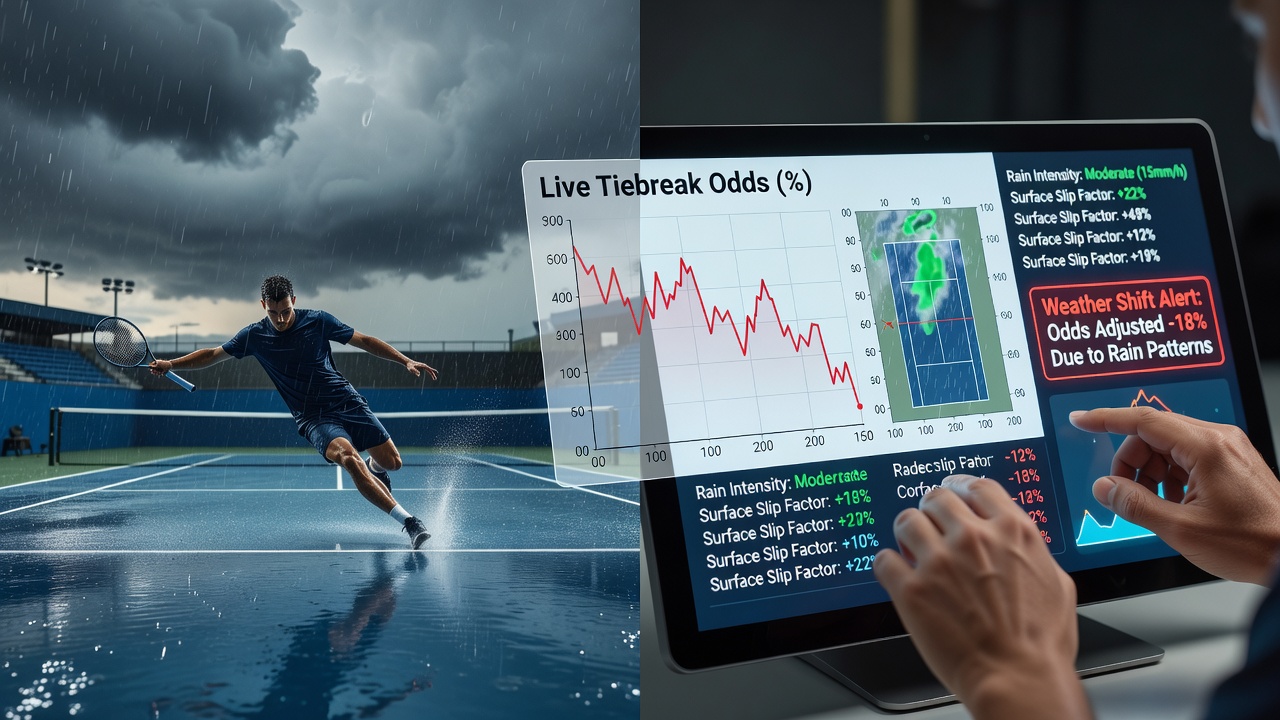
 Data from major tournaments shows that rainfall consistently modifies court friction and ball bounce in tennis, which in turn influences live betting odds during tiebreak phases. Observers tracking matches in July 2026 note that grass and clay surfaces respond differently to precipitation, with grass courts losing pace faster while clay absorbs moisture and slows rallies. These shifts prompt betting platforms to adjust in-play lines rapidly once rain begins, and layered accumulator builders often monitor weather feeds alongside score updates to time their entries. Tennis tiebreaks amplify these effects because the compressed scoring format leaves little room for recovery from altered conditions. A single break point sequence can swing when the ball skids or grips unexpectedly on damp turf. Researchers analyzing historical match data find that players with strong serve percentages see their implied probabilities drop when surface grip decreases, while return specialists gain slight edges. Accumulator strategies therefore incorporate real-time court condition reports to layer tennis legs onto golf selections where bunker play variables also fluctuate with moisture levels. Golf bunkers present a parallel challenge because rain alters sand compaction and ball lie angles. Wetter sand tends to produce more predictable escapes, yet it increases the chance of plugged lies that raise stroke averages for certain player profiles. Figures from professional tours indicate that scoring averages in bunker-heavy holes rise or fall based on rainfall totals recorded in the preceding 24 hours. Those constructing multi-sport accumulators pair these golf metrics with tennis tiebreak data because both markets exhibit rapid odds movement once weather systems move through venues.
Tracking Rainfall Data Across Venues
July 2026 schedules placed several high-profile tennis events and golf majors in regions prone to summer thunderstorms, and analysts cross-referenced precipitation records with live odds feeds to identify patterns. National weather services supplied hourly rainfall totals that betting syndicates integrated into algorithmic models. These models recalibrate probabilities for tiebreak winners and bunker par saves whenever cumulative rainfall exceeds thresholds documented in past tournaments.
One study compiled by sports performance labs revealed that tiebreak completion times lengthen on rain-affected courts while bunker shot success rates dip when sand saturation reaches specific percentages. Accumulator builders combine these variables by selecting legs where both sports demonstrate correlated weather sensitivity. The approach requires simultaneous monitoring of radar updates and in-play statistics rather than isolated event tracking.
Accumulator Construction Methods
Layered builds start with core selections derived from pre-match form, then add weather-adjusted legs once live conditions emerge. For instance, a tennis player whose serve relies on high bounce may see reduced odds when rain softens the court, prompting inclusion of an opposing player in the accumulator. On the golf side, specialists in bunker recovery maintain steadier performance metrics during light showers, allowing builders to offset higher-risk tennis legs with more stable golf outcomes.
Industry reports from the European Gaming and Betting Association highlight that multi-sport accumulators incorporating environmental variables have grown in volume during periods of unsettled summer weather. Builders review historical correlations between rainfall and scoring shifts, then apply filters that exclude selections where weather impact remains statistically insignificant. This filtering process reduces variance across the overall bet structure.
Live Adjustments and Market Responses
Betting exchanges update odds within seconds of weather data releases because tiebreak points and bunker shots represent high-leverage moments. A sudden downpour can shift a tennis tiebreak favorite's implied win probability by several percentage points, and similar recalibrations occur in golf when bunker lies worsen. Accumulator participants who monitor both feeds simultaneously gain timing advantages that static pre-match builds lack.
According to analysis published by the Nevada Gaming Control Board, in-play market liquidity increases during weather events because participants react to visible surface changes on broadcast feeds. These reactions create brief windows where layered bets can be constructed before odds fully stabilize. The process demands rapid synthesis of meteorological reports, player statistics, and current scorelines rather than reliance on any single data stream.
Conclusion
Weather-driven surface changes continue to influence live odds structures in both tennis tiebreaks and golf bunker plays, and accumulator strategies that integrate rainfall data with performance metrics reflect measurable market responses. Observers tracking July 2026 events documented consistent adjustments across platforms once precipitation altered playing conditions. Those combining the two sports maintain focus on correlated variables to manage exposure across multiple legs while markets remain active.