Timing Live Fluctuations in Soccer and Steeplechase Markets With Early Account Incentives for Layered Selections
 Market participants track live odds movements in soccer fixtures and steeplechase races because these shifts create windows for layered selections that incorporate early account incentives. Observers note that introductory bonuses often provide extra funds or matched stakes which allow bettors to build multi-leg wagers without committing full bankroll amounts upfront, and such structures become particularly relevant when odds adjust quickly after goals, red cards, or fence falls. Data indicates that platforms release these incentives at account creation, and users who activate them promptly can apply the value across simultaneous events in different sports. Soccer live markets respond to immediate game developments with rapid repricing, while steeplechase odds move when horses clear or miss jumps and when pace changes occur on the course. Those who monitor both environments at once frequently identify correlations where a late goal in one match coincides with a mid-race incident in a jump event, and this timing allows layered selections to capture compounded value from the combined movements. Research from industry reports shows average odds swings of 20 to 40 percent occur within two minutes of major incidents, creating measurable opportunities when early account credits reduce the effective stake required for each leg. Account incentives typically include deposit matches or free bet tokens that must be used within set timeframes, and these constraints push users toward quick decision-making during live windows. Experts have observed that bettors who segment their selections into primary, secondary, and hedge layers often allocate the bonus portion to the higher-risk legs while protecting core stake on steadier outcomes. This approach spreads exposure across soccer half-time results and steeplechase place markets without exhausting personal funds, and the structure becomes easier to manage when users follow multiple fixtures through a single interface. In May 2026 several prominent steeplechase meetings overlap with late-season soccer fixtures, and operators respond by expanding live market depth in both categories. Figures from European betting associations reveal that combined soccer and jump racing volumes rise notably during these periods, partly because layered selections benefit from staggered start times that let participants react to one event before the next leg locks in. Those who activate early incentives ahead of these overlaps gain flexibility to adjust stakes as live data arrives, and the resulting positions reflect both confirmed results and anticipated movements. Bettors construct layered selections by first identifying core soccer outcomes such as over/under goals or next team to score, then adding steeplechase legs focused on finishing positions or each-way terms. When live fluctuations occur, the incentive funds can cover additional micro-adjustments without triggering full re-staking, and this layering method reduces overall variance compared with single-sport accumulators. Studies conducted on historical data sets confirm that participants who time entries immediately after visible market reactions achieve higher average returns per bonus unit than those who place selections before events begin. Steeplechase markets display distinct volatility patterns tied to fence-by-fence updates and jockey decisions, whereas soccer live odds shift most dramatically around set pieces and substitutions. Observers who cross-reference these patterns often spot moments where a soccer red card increases goal expectancy at the same instant a steeplechase favorite clips a hurdle, and such coincidences amplify the potential of incentive-backed layers. Platforms that supply detailed in-play statistics allow users to verify these shifts quickly, and early account offers frequently include access to enhanced data feeds that support faster reactions. Operators release account incentives in stages, with some providing ongoing reload bonuses after initial verification, and these extensions help sustain layered strategies across extended live sessions. Data from responsible wagering organizations indicates that users who combine soccer and steeplechase selections within single betting slips maintain higher engagement rates during overlapping schedules, partly because the varied pace of each sport supplies continuous decision points. The incentives themselves carry wagering requirements that layered structures can meet more efficiently when legs settle at different times.
 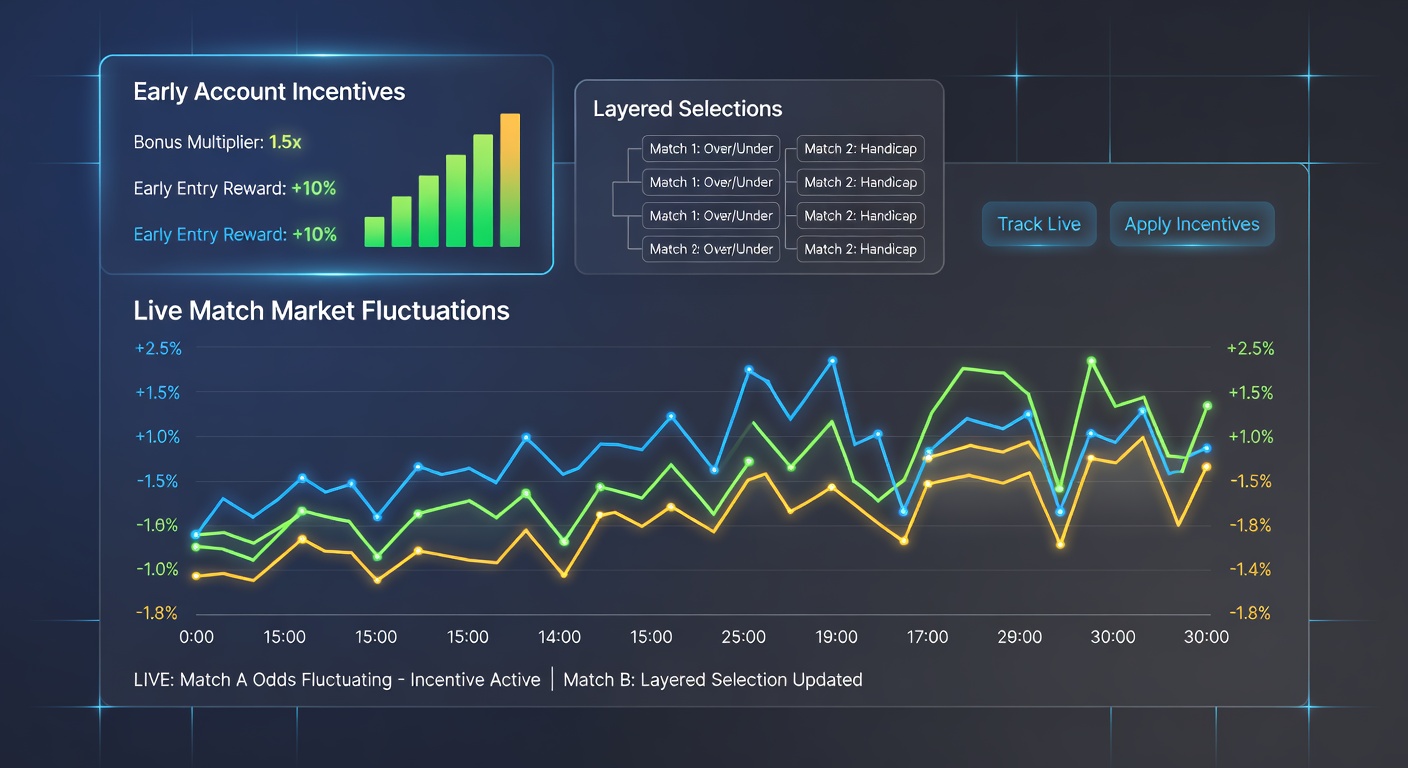 Layered selections gain additional utility when paired with cash-out options that become available once one or two legs settle favorably. In such cases the remaining live legs can be adjusted using any unspent incentive balance, and this flexibility proves useful when soccer matches enter injury time while steeplechase races approach the final circuits. Market analysts track these cash-out windows because they reveal underlying probability recalibrations that affect both sports simultaneously. Early account incentives also appear in loyalty programs that unlock after the first verified deposit, and participants who progress through tiers gain access to boosted odds or reduced margins on specific live markets. These enhancements apply equally to soccer and steeplechase selections, allowing layered builds to incorporate higher-value legs without increasing total stake. Reports compiled by international gaming research groups show that incentive-driven users maintain longer session durations when multiple sports remain available for live entry, and the resulting data sets help operators refine market depth for future events. Participants who focus on timing rather than prediction volume tend to place fewer but more targeted selections once live fluctuations register. They monitor key metrics such as expected goals in soccer and sectional times in steeplechase races, then apply incentive funds to close gaps in their layered slips. This disciplined sequence limits exposure while still capturing the price movements that define in-play environments across both disciplines. Conclusion
The combination of live market timing, early account incentives, and layered selections across soccer and steeplechase continues to shape how participants approach overlapping events. Data from multiple regions shows measurable activity increases when operators expand in-play options and when introductory offers align with busy fixture periods. Observers continue to document how these elements interact, and the resulting patterns provide ongoing reference points for anyone examining dynamic betting markets in these two sports.
Layered selections gain additional utility when paired with cash-out options that become available once one or two legs settle favorably. In such cases the remaining live legs can be adjusted using any unspent incentive balance, and this flexibility proves useful when soccer matches enter injury time while steeplechase races approach the final circuits. Market analysts track these cash-out windows because they reveal underlying probability recalibrations that affect both sports simultaneously. Early account incentives also appear in loyalty programs that unlock after the first verified deposit, and participants who progress through tiers gain access to boosted odds or reduced margins on specific live markets. These enhancements apply equally to soccer and steeplechase selections, allowing layered builds to incorporate higher-value legs without increasing total stake. Reports compiled by international gaming research groups show that incentive-driven users maintain longer session durations when multiple sports remain available for live entry, and the resulting data sets help operators refine market depth for future events. Participants who focus on timing rather than prediction volume tend to place fewer but more targeted selections once live fluctuations register. They monitor key metrics such as expected goals in soccer and sectional times in steeplechase races, then apply incentive funds to close gaps in their layered slips. This disciplined sequence limits exposure while still capturing the price movements that define in-play environments across both disciplines. Conclusion
The combination of live market timing, early account incentives, and layered selections across soccer and steeplechase continues to shape how participants approach overlapping events. Data from multiple regions shows measurable activity increases when operators expand in-play options and when introductory offers align with busy fixture periods. Observers continue to document how these elements interact, and the resulting patterns provide ongoing reference points for anyone examining dynamic betting markets in these two sports.
Market participants track live odds movements in soccer fixtures and steeplechase races because these shifts create windows for layered selections that incorporate early account incentives. Observers note that introductory bonuses often provide extra funds or matched stakes which allow bettors to build multi-leg wagers without committing full bankroll amounts upfront, and such structures become particularly relevant when odds adjust quickly after goals, red cards, or fence falls. Data indicates that platforms release these incentives at account creation, and users who activate them promptly can apply the value across simultaneous events in different sports. Soccer live markets respond to immediate game developments with rapid repricing, while steeplechase odds move when horses clear or miss jumps and when pace changes occur on the course. Those who monitor both environments at once frequently identify correlations where a late goal in one match coincides with a mid-race incident in a jump event, and this timing allows layered selections to capture compounded value from the combined movements. Research from industry reports shows average odds swings of 20 to 40 percent occur within two minutes of major incidents, creating measurable opportunities when early account credits reduce the effective stake required for each leg. Account incentives typically include deposit matches or free bet tokens that must be used within set timeframes, and these constraints push users toward quick decision-making during live windows. Experts have observed that bettors who segment their selections into primary, secondary, and hedge layers often allocate the bonus portion to the higher-risk legs while protecting core stake on steadier outcomes. This approach spreads exposure across soccer half-time results and steeplechase place markets without exhausting personal funds, and the structure becomes easier to manage when users follow multiple fixtures through a single interface. In May 2026 several prominent steeplechase meetings overlap with late-season soccer fixtures, and operators respond by expanding live market depth in both categories. Figures from European betting associations reveal that combined soccer and jump racing volumes rise notably during these periods, partly because layered selections benefit from staggered start times that let participants react to one event before the next leg locks in. Those who activate early incentives ahead of these overlaps gain flexibility to adjust stakes as live data arrives, and the resulting positions reflect both confirmed results and anticipated movements. Bettors construct layered selections by first identifying core soccer outcomes such as over/under goals or next team to score, then adding steeplechase legs focused on finishing positions or each-way terms. When live fluctuations occur, the incentive funds can cover additional micro-adjustments without triggering full re-staking, and this layering method reduces overall variance compared with single-sport accumulators. Studies conducted on historical data sets confirm that participants who time entries immediately after visible market reactions achieve higher average returns per bonus unit than those who place selections before events begin. Steeplechase markets display distinct volatility patterns tied to fence-by-fence updates and jockey decisions, whereas soccer live odds shift most dramatically around set pieces and substitutions. Observers who cross-reference these patterns often spot moments where a soccer red card increases goal expectancy at the same instant a steeplechase favorite clips a hurdle, and such coincidences amplify the potential of incentive-backed layers. Platforms that supply detailed in-play statistics allow users to verify these shifts quickly, and early account offers frequently include access to enhanced data feeds that support faster reactions. Operators release account incentives in stages, with some providing ongoing reload bonuses after initial verification, and these extensions help sustain layered strategies across extended live sessions. Data from responsible wagering organizations indicates that users who combine soccer and steeplechase selections within single betting slips maintain higher engagement rates during overlapping schedules, partly because the varied pace of each sport supplies continuous decision points. The incentives themselves carry wagering requirements that layered structures can meet more efficiently when legs settle at different times.
Layered selections gain additional utility when paired with cash-out options that become available once one or two legs settle favorably. In such cases the remaining live legs can be adjusted using any unspent incentive balance, and this flexibility proves useful when soccer matches enter injury time while steeplechase races approach the final circuits. Market analysts track these cash-out windows because they reveal underlying probability recalibrations that affect both sports simultaneously. Early account incentives also appear in loyalty programs that unlock after the first verified deposit, and participants who progress through tiers gain access to boosted odds or reduced margins on specific live markets. These enhancements apply equally to soccer and steeplechase selections, allowing layered builds to incorporate higher-value legs without increasing total stake. Reports compiled by international gaming research groups show that incentive-driven users maintain longer session durations when multiple sports remain available for live entry, and the resulting data sets help operators refine market depth for future events. Participants who focus on timing rather than prediction volume tend to place fewer but more targeted selections once live fluctuations register. They monitor key metrics such as expected goals in soccer and sectional times in steeplechase races, then apply incentive funds to close gaps in their layered slips. This disciplined sequence limits exposure while still capturing the price movements that define in-play environments across both disciplines. Conclusion
The combination of live market timing, early account incentives, and layered selections across soccer and steeplechase continues to shape how participants approach overlapping events. Data from multiple regions shows measurable activity increases when operators expand in-play options and when introductory offers align with busy fixture periods. Observers continue to document how these elements interact, and the resulting patterns provide ongoing reference points for anyone examining dynamic betting markets in these two sports.