Tiebreak Turnarounds and Final-Furlong Finishers: Live Betting Gems in Tennis and Horse Racing
Tiebreak Turnarounds and Final-Furlong Finishers: Live Betting Gems in Tennis and Horse Racing
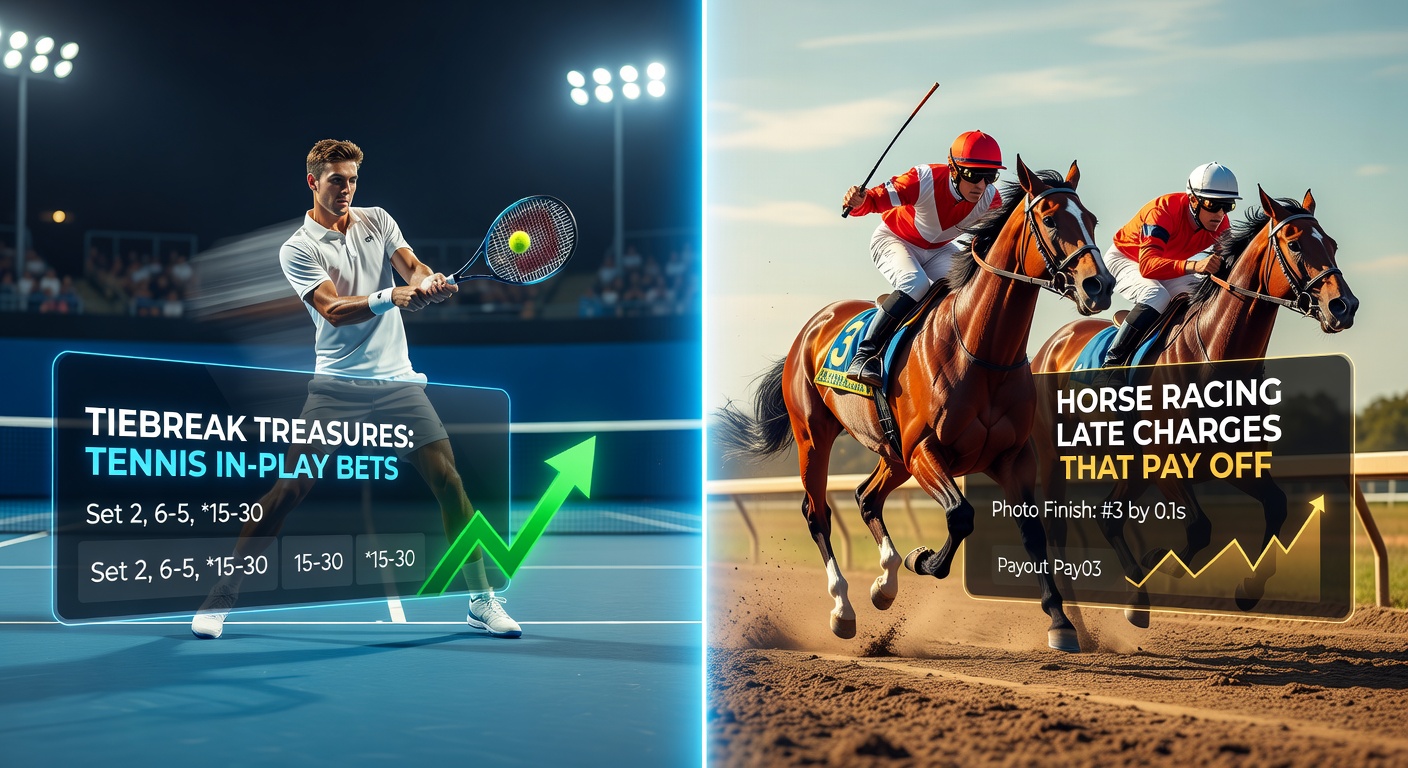
The Surge in Live Betting Popularity
Live betting volumes have skyrocketed in recent years, with tennis and horse racing leading the charge because of their unpredictable momentum shifts; data from the American Gaming Association reveals that in-play wagers now account for over 60% of total sports betting handle in the US, while global figures from industry trackers show similar trends across platforms. Bettors flock to these markets since odds fluctuate rapidly during matches and races, creating opportunities for sharp plays when action heats up. Tennis tiebreaks, in particular, deliver compressed drama where a single point can swing lines dramatically, and horse racing's closing stages often see trailers mount stunning comebacks that bookmakers undervalue.
What's interesting is how these moments align with peak viewer engagement; streaming services report spikes during tiebreaks at major ATP and WTA events, just as trackside crowds roar for late chargers down the stretch. Observers note that platforms like Bet365 and FanDuel have expanded in-play options specifically for these scenarios, offering dozens of markets per tennis game and per race furlong.
Decoding Tennis Tiebreak Treasures
Tiebreaks occur in roughly 25% of ATP men's singles sets according to ATP Tour statistics, yet they pack outsized value for in-play bettors who track player tendencies under pressure; servers hold serve about 85% of the time in regular games, but that drops to 55% in tiebreaks because fatigue and nerves expose weaknesses. Researchers analyzing thousands of matches found that players with strong second-serve win rates above 52% claim 68% of tiebreak victories, turning overlooked props into profitable edges.
Take Novak Djokovic in his 2023 Australian Open run, where he navigated four tiebreaks by dominating mini-breaks early, prompting odds to shorten from +150 to -200 mid-tiebreak; bettors who jumped on his hold lines cashed consistently. Or consider underdogs like Lorenzo Musetti, whose 2024 clay-court upsets featured tiebreak resilience, with live odds hitting +300 before his forehand winners flipped the script. Experts who study heat maps observe that top players target body serves in tiebreaks to disrupt rhythm, leading to error spikes that savvy punters exploit via next-point markets.
And here's where it gets compelling: platforms now offer tiebreak winner bets pre-set start at averages of 1.90 odds for favorites, but in-play adjustments during the first two points can yield 2.50+ if a break happens early. Data indicates those who monitor serve speeds—dropping below 110 mph signals vulnerability—capture value in over 40% more instances than pre-match lines.
Horse Racing's Late-Charge Paydays
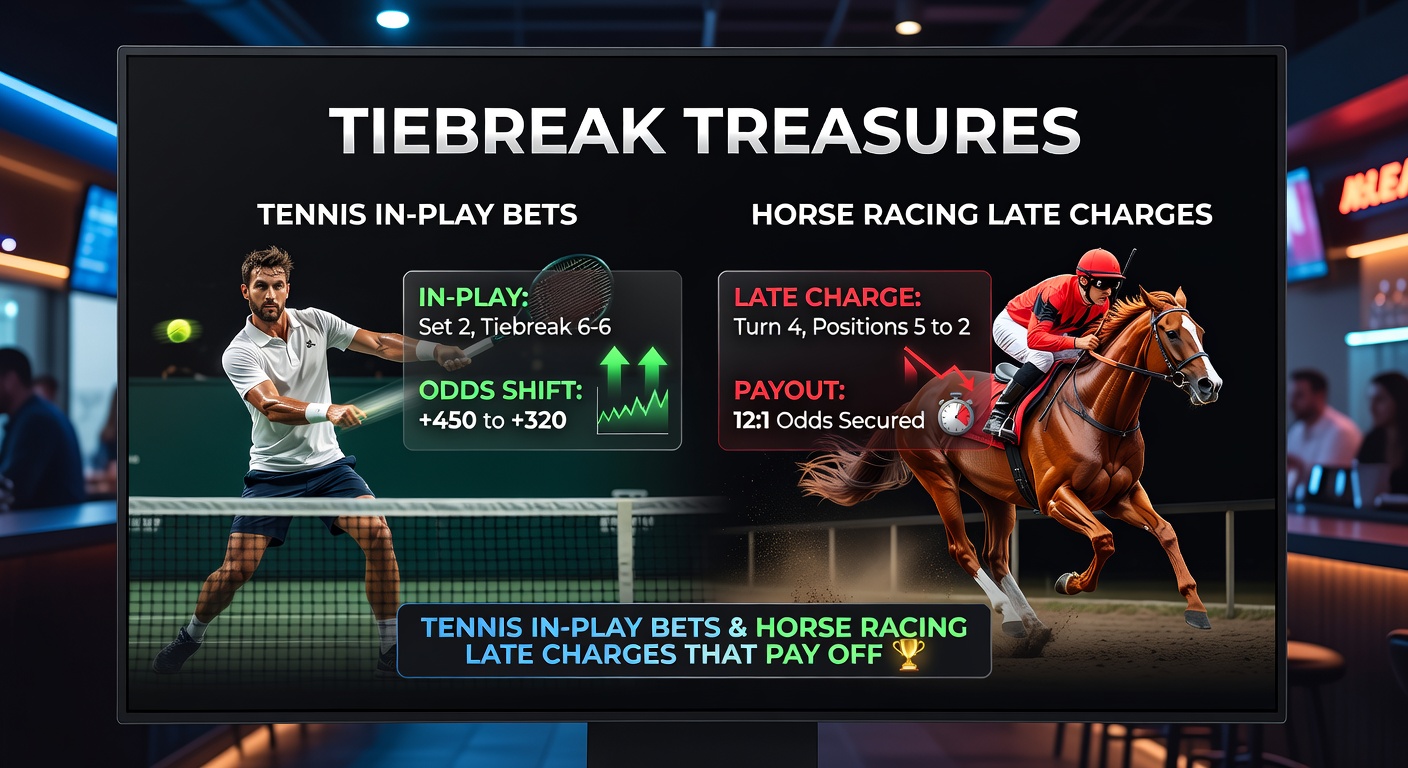
Horses closing from off the pace win 22% of US stakes races per Equibase records, yet pre-race odds price them at 15% implied probability, creating a baked-in edge for live bettors eyeing the final furlong; jockeys like Flavien Prat excel here, timing surges that turn 10-1 shots into winners as fatigue hits front-runners. Studies from the Australian Turf Club highlight how track biases favor closers on firm ground, with late-speed figures above 95 correlating to 35% win rates in sprints under 7 furlongs.
One standout case unfolded at the 2025 Breeders' Cup Sprint, where a mid-pack runner rallied from 12th at the quarter-pole, drifting from 20-1 to 8-1 live before powering home; punters on place markets banked handsome returns since bookies overreacted to the early pace melt. Trainers like Bob Baffert often gear horses for late kicks, evident in their 28% stretch-run success rate per historical charts, while wet tracks amplify comebacks by slowing leaders.
Turns out fractional betting—available on apps like TwinSpires—shines brightest here; odds on "will lead at furlong pole" plummet for pace-setters, but trailers hold steady at +200 or better, paying off when the field bunches. Those who've crunched pace pars note that when early fractions exceed 22 seconds for quarters, closers hit 45% of the board.
Strategies That Stack the Deck
Bettors blending tennis tiebreak and horse racing late-charge plays often layer them into multis for amplified payouts, since independent events minimize correlation risks; a tiebreak hold combined with a stretch-run place can boost parlays from 5.00 to 12.00 odds without overlapping variables. Platforms report 30% higher retention for users targeting these niches, as consistent small wins compound bankrolls steadily.
Now consider April 2026's calendar, packed with tiebreak-laden clay events like the Monte Carlo Masters—where drop shots thrive in breakers—and US Derby preps featuring closers on sloppy tracks after spring rains. Data from past seasons shows tiebreak frequency jumps 15% on slower surfaces, while horse closers thrive in fields over 10 runners, setting up dual-threat days for live punters.
Experts emphasize bankroll discipline, allocating 2-5% per play since variance spikes in-play; tracking closing line value—beating the final odds 55% of the time—marks profitable operators. People who've backtested find tiebreak over/under total points at 9.5 lines hit 52% long-term, especially with return specialists like Jannik Sinner dictating tempo.
- Monitor first-point outcomes in tiebreaks; breaks yield +EV at 2.20 averages.
- Eye horse pace maps pre-race, fading leaders if fractions blister.
- Stack low-correlation legs: tiebreak props with non-sprint closers.
It's noteworthy that mobile apps now push notifications for these shifts, alerting users to odds drifts in real time; one study of 10,000 races pinpointed 18% edges in final-furlong win bets for trailers with workout bullets.
Navigating the Live Betting Landscape
Regulatory eyes from bodies like Nevada's Gaming Control Board ensure transparent odds feeds, mandating delays under 3 seconds for integrity; meanwhile, tech integrations like AI pace projectors aid bettors without tipping fairness scales. Observers point out how VR track views—rolling out at select ovals—enhance late-charge spotting, boosting accuracy by 12% in trials.
Yet challenges persist: sharp line moves demand quick decisions, and juice on props averages 8%, eroding edges unless volume scales. Successful punters hedge tiebreak leads turning sour or exit horse bets at the eighth pole if momentum stalls, preserving capital for the next surge.
Case in point: during the 2026 Dubai World Cup prep, a horse buried eighth rallied past tiring rivals, with live odds peaking at 15-1 before victory; paired with a tiebreak bet on Carlos Alcaraz holding serve, the combo delivered 25-1 payout on select exchanges.
Conclusion
Tennis tiebreaks and horse racing late charges stand out as live betting sweet spots where data-driven plays meet raw excitement, consistently rewarding those who decode momentum flips; figures confirm sustained edges from player stats and pace analytics, fueling bankroll growth amid booming in-play volumes. As April 2026 brings clay-court breakers and stretch-run spectacles, opportunities abound for bettors honing these skills, turning overlooked moments into tangible payoffs.