European Weather Patterns Reshaping Multi-Sport Parlay Strategies on Tracks and Courts
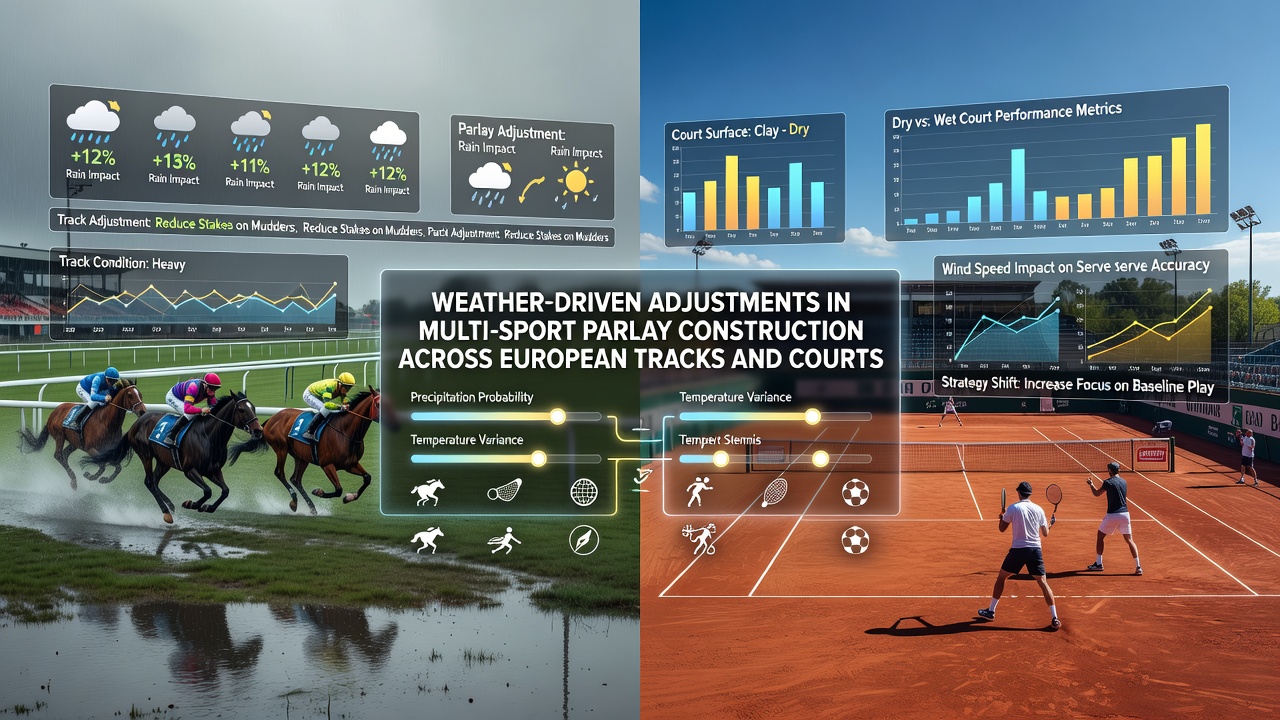
Weather conditions across European venues continue to influence how bettors construct multi-sport parlays that combine selections from horse racing tracks and tennis or golf courts, with data from meteorological services showing distinct seasonal shifts that alter probabilities in real time. In July 2026, patterns of higher precipitation in northern tracks and heatwaves affecting southern courts have prompted adjustments in accumulator structures that link these events. Those who track weather variables note that rainfall amounts exceeding 10 millimeters on turf surfaces often slow horse times by measurable margins while simultaneously delaying tennis matches on clay courts in regions like Spain and France.
Track Surface Responses to Rainfall and Temperature Swings
Horse racing circuits in Britain, Ireland, and France respond directly to precipitation levels, where heavy rain transforms firm ground into soft or heavy going that favors certain runners over others. Observers have documented cases where a sudden downpour at Ascot or Chantilly altered finishing positions enough to shift parlay outcomes when combined wth concurrent tennis fixtures. Temperature fluctuations further compound these effects, since warmer spells dry out tracks faster and change pace expectations, leading bettors to recalibrate selections mid-week based on updated forecasts from the European Centre for Medium-Range Weather Forecasts.
Multi-sport parlays that pair a horse racing leg with a tennis match require monitoring these surface changes because a delayed tennis start due to rain can overlap with later races and alter live odds. Data indicates that such timing mismatches occur more frequently during summer months when thunderstorms cluster across central Europe, forcing constructors to build in contingency legs from golf events less prone to complete stoppages.
Court Conditions and Wind Impacts on Tennis and Golf Selections
Tennis courts across the continent experience variable playability when wind speeds exceed 25 kilometers per hour, particularly on outdoor hard and grass surfaces in the Netherlands and Germany. These conditions increase unforced error rates and shorten rallies, which in turn modifies set and match probabilities that feed into parlays. Golf courses face similar pressures, where crosswinds on links layouts in Scotland and coastal Spain affect driving accuracy and approach shots, prompting bettors to favor players with stronger wind records when constructing accumulators.

Research from the World Meteorological Organization highlights how July heat indices above 30 degrees Celsius in southern venues accelerate player fatigue during best-of-three sets, creating measurable edges for those who adjust parlay combinations to include morning sessions or shaded court selections. Bettors often layer these insights with horse racing data where cooler morning temperatures at tracks preserve better ground conditions for speed horses.
Integrated Parlay Construction Techniques Across Regions
Constructors of multi-sport bets now routinely incorporate regional weather models that span from Scandinavian fjord tracks to Mediterranean courts, adjusting stake distributions when forecasts predict synchronized disruptions. One documented approach involves starting with stable golf selections during high-wind periods before adding horse racing legs once track updates confirm going descriptions, then finishing with tennis matches scheduled for indoor or covered facilities. This sequencing reduces variance because weather events rarely affect all three sports uniformly on the same day.
Figures from industry analytics providers reveal that parlays incorporating at least one weather-buffered leg maintain steadier returns during volatile summer schedules, particularly when European events coincide with major tournaments. Those who study historical correlations between rainfall data and outcome deviations find that combining selections from drier inland venues with weather-sensitive coastal tracks creates natural diversification within a single accumulator.
Timing Adjustments and Data Integration Practices
Bettors integrate live weather feeds with betting platforms to refine parlay legs as conditions evolve, especially during July 2026 when extended daylight hours extend play windows and increase exposure to afternoon storms. A sudden temperature drop at a golf venue can shift scoring averages enough to invalidate earlier assumptions when paired with a horse race that has already gone off under stable conditions. Platforms that supply granular forecasts allow constructors to swap underperforming legs without voiding the entire structure, provided rules permit such substitutions before events commence.
Academic studies on sports analytics, including work from institutions in Australia and Canada, demonstrate that weather variables explain a significant portion of variance in both equine performance metrics and racket sport outcomes, underscoring the value of cross-sport data fusion. European operators have adopted similar modeling approaches that feed into customer tools, enabling more precise timing of accumulator entries around forecast updates.
Conclusion
Weather continues to serve as a primary driver for adjustments in multi-sport parlay construction that spans European tracks and courts, with observable effects on surface conditions, scheduling, and probability calculations. Data from international meteorological and sports research bodies supports the ongoing refinement of these strategies as seasonal patterns shift, particularly during periods of heightened activity like July 2026. Bettors who integrate these variables maintain structures that account for regional differences while preserving the core mechanics of accumulator payouts across disciplines.