Advanced Layering of Paddock Records and Tee Statistics in Golf and Racing Hybrid Wagers
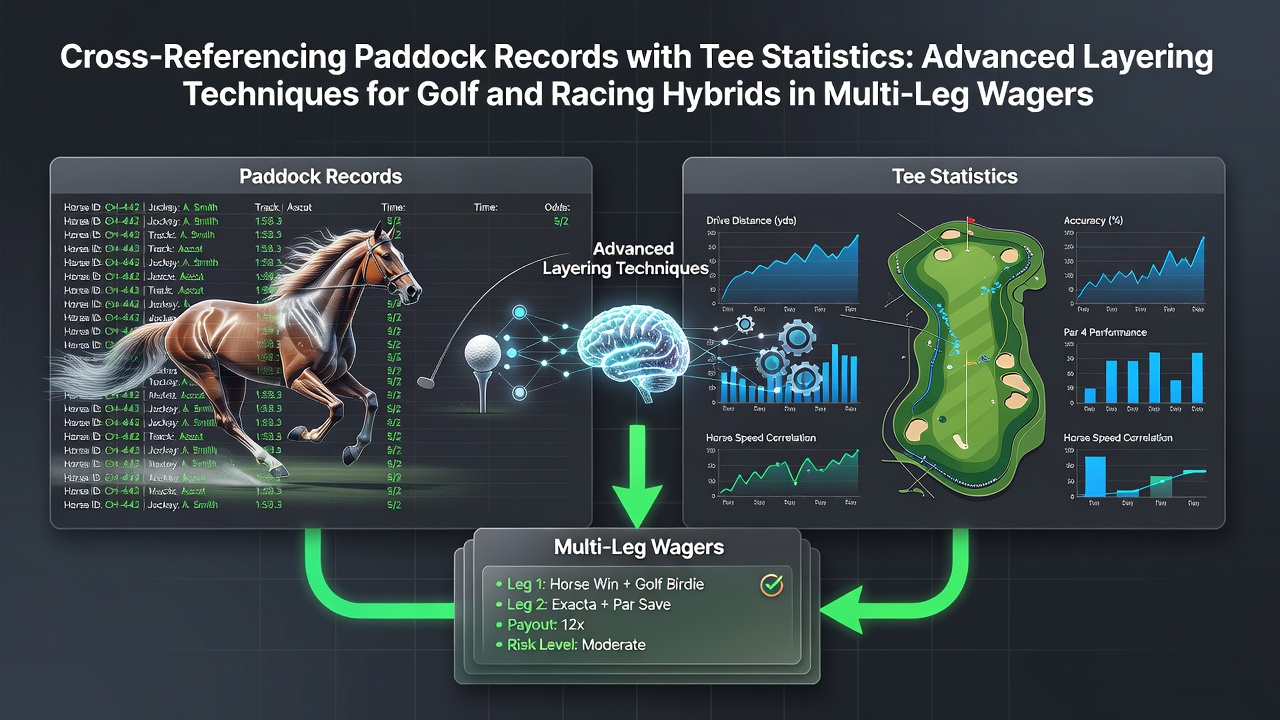
Cross-referencing paddock records with tee statistics creates structured approaches for those constructing multi-leg wagers that combine horse racing and golf events, and industry data shows participants increasingly examine physical condition indicators from equine inspections together with driving metrics from professional golf tournaments. Paddock records typically include details on a horse's weight, muscle tone, and recent workout patterns while tee statistics cover fairway accuracy percentages, average driving distance, and first-tee scoring averages drawn from official tournament logs.
Data Foundations in Equine and Golf Performance Tracking
Observers note that equine authorities maintain detailed paddock assessment logs that record variables such as sweat patterns and behavioral cues prior to race starts, whereas golf governing bodies compile tee statistics through shot-tracking systems that log launch angles and dispersion rates on opening holes. Those who build hybrid wagers often align these datasets by matching a horse's recorded readiness indicators with a golfer's historical tee performance on specific course layouts, and this alignment supports selections across separate events scheduled on the same day or weekend. Figures from sports analytics providers indicate that combined datasets now cover thousands of individual performance entries each season, allowing systematic comparisons without reliance on single-sport trends alone.
Techniques for Aligning Records Across Sports
Layering begins when analysts extract key fields from paddock reports, including stride length estimates and coat condition scores, then map them against tee-box data points such as percentage of drives exceeding 300 yards or greens-in-regulation rates from the first hole. Software tools used by professional syndicates facilitate these mappings by assigning weighted values to each variable, and the resulting composite scores help rank potential legs within an accumulator structure. Research from sports data institutes demonstrates that such cross-referencing improves identification of outliers, for instance when a horse shows strong paddock metrics on firm ground while a paired golfer posts elevated driving accuracy on similar turf firmness ratings.
Multi-Leg Construction Methods
Multi-leg wagers in this category usually span three to five events, mixing one or two horse races with two or three golf tournament segments, and builders apply sequential filters that first eliminate selections failing basic paddock or tee thresholds before applying correlation rules. One documented approach involves checking a horse's recorded pre-race heart-rate recovery times against a golfer's average score on par-four opening holes, then confirming both selections share similar environmental variables such as temperature ranges or wind conditions reported at their respective venues. Data from North American racing authorities shows seasonal peaks in hybrid wager volume during periods when major golf majors overlap with thoroughbred festivals, including the weeks leading into June 2026 when several prominent events coincide on the calendar.

Practical Examples from Recent Seasons
Take one case where analysts paired a filly's paddock record of relaxed demeanor and even muscle tone at a spring meeting with a golfer's tee statistics showing 68 percent fairway accuracy across early-season events on comparable grass types, resulting in a two-leg component that contributed to larger accumulator payouts when both outcomes aligned. Another instance involved cross-checking a gelding's recorded weight loss trends from paddock notes against a player's declining first-tee birdie rate during humid conditions, prompting removal of that leg from consideration. Industry organizations such as the Australian Gambling Research Centre have published summaries indicating that participants who maintain separate databases for each sport achieve higher consistency in leg selection when they later merge the filtered results.
Tools and External Data Integration
Modern layering incorporates feeds from shot-link systems in golf alongside official race-day veterinary summaries in horse racing, and bettors frequently import these feeds into spreadsheet models that calculate joint probability estimates. The Canadian Equine Performance Database supplies standardized paddock variables that integrate cleanly with golf metrics exported from tournament sanctioning bodies, enabling users to run scenario tests across multiple time zones. Those who have studied these methods observe that real-time updates to either dataset require immediate recalculation of accumulator odds, particularly when weather shifts alter both track conditions and course firmness simultaneously.
Seasonal Patterns and Calendar Overlaps
June 2026 features several overlapping fixtures where morning horse meetings in Europe align with afternoon golf rounds in North America, creating windows for hybrid accumulator placement, and data aggregators report increased query volumes on combined datasets during these periods. Patterns emerge when analysts track how paddock moisture readings correlate with golf tee statistics collected under similar humidity levels, allowing refinement of selection criteria ahead of each fixture cluster. Observers note that regulatory frameworks in multiple jurisdictions now require clear documentation of data sources used in promotional materials for such wagers, encouraging transparency in how paddock and tee inputs are weighted.
Conclusion
Cross-referencing paddock records with tee statistics supplies a measurable framework for constructing hybrid multi-leg wagers that span golf and horse racing, and continued development of integrated data platforms supports ongoing refinement of these techniques. Participants who maintain disciplined alignment procedures between the two datasets position themselves to evaluate selections across variable conditions while remaining within established analytical boundaries.